A VPS is a virtual slice of a physical server that you share with other customers; a dedicated server is the whole physical machine, used only by you. For most websites, including busy WordPress sites and small shops, a VPS gives enough power for far less money. A dedicated server makes sense when you need guaranteed hardware, very heavy workloads, or strict isolation.
This guide explains the real differences, what each costs, and the signs that you have outgrown a VPS.
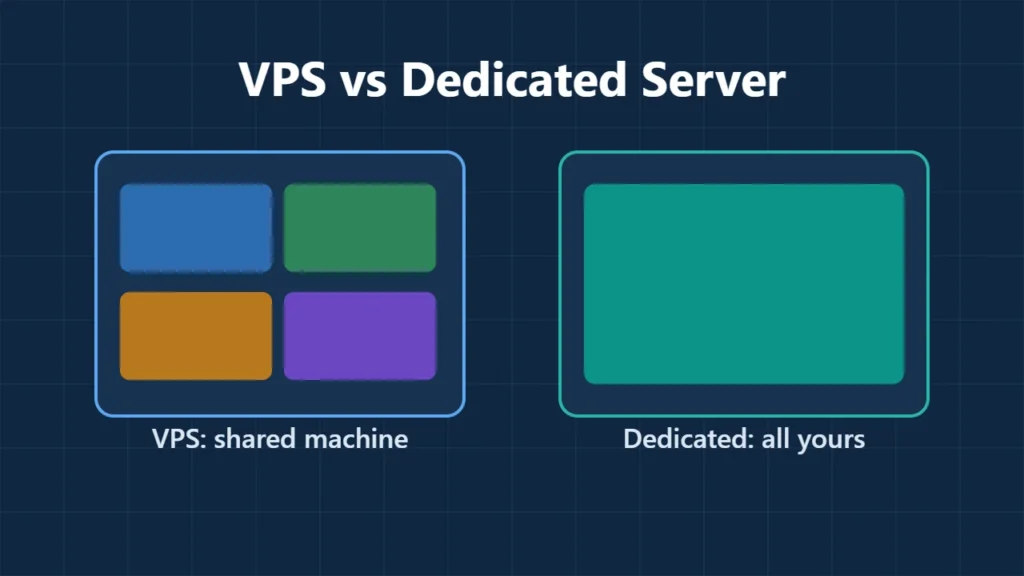
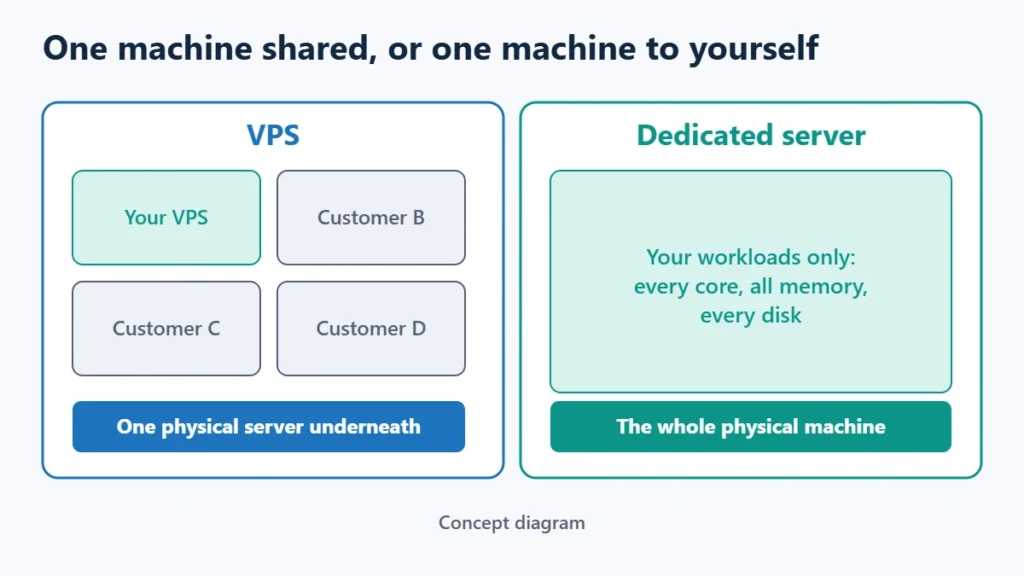
Table of Contents
- 1VPS vs Dedicated Server at a Glance
- 2How a VPS Works
- 3How a Dedicated Server Works
- 4What Each Costs
- 5Managed or Unmanaged Matters as Much
- 6Signs You Have Outgrown a VPS
- 7Which Should You Choose?
- 8Frequently Asked Questions
- Is a dedicated server faster than a VPS?
- Is a VPS secure enough for a business site?
- How much does a dedicated server cost?
- Can I move from a VPS to a dedicated server later?
- Do I need a dedicated server for WooCommerce?
VPS vs Dedicated Server at a Glance
| VPS | Dedicated server | |
|---|---|---|
| What you get | A virtual machine with a set share of CPU, memory and disk | A whole physical machine |
| Shared with others | Yes, the underlying hardware | No |
| Typical starting price | A few dollars a month | Often over $100 a month, managed |
| Resizing | Usually a plan change in the dashboard | Often means new hardware or a migration |
| Setup time | Usually minutes | Can take longer, depending on the provider |
| Best for | Most websites, apps and stores | Heavy, steady workloads and strict isolation |
How a VPS Works
A provider runs virtualisation software on a powerful physical server and divides it into several virtual private servers. Each VPS has its own operating system and its allocated resources, and you get root access as if it were your own machine.
The trade-off is that the hardware underneath is shared. Good providers limit how much one customer can affect another, but CPU, disk and network performance can still vary with what else runs on the same host. Some providers sell dedicated-CPU VPS plans to reduce that variation, at a higher price.
How a Dedicated Server Works
With a dedicated server, the entire machine is yours. Every CPU core, all the memory and every disk serve only your workloads, so there is no neighbour to compete with. You also choose more about the hardware itself, such as the processor family, memory amount and disk layout.
The costs are higher prices and less flexibility. Adding capacity usually means upgrading the hardware or moving to a bigger machine, rather than moving a slider.
What Each Costs
| Example plan | Type | Specs | Price |
|---|---|---|---|
| DigitalOcean Basic Droplet | Unmanaged VPS | 1 vCPU, 1 GB memory, 25 GB SSD | $6 a month |
| DigitalOcean Basic Droplet | Unmanaged VPS | 4 vCPU, 8 GB memory, 160 GB SSD | $48 a month |
| Hostinger KVM 2 | VPS | 2 vCPU, 8 GB memory, 100 GB NVMe | $8.79 a month for 24 months, renews at $14.99 |
| Liquid Web Intel Xeon E-2134 | Fully managed dedicated | 4 cores, 16 GB memory, 480 GB SSD, cPanel | $163.25 a month on a 2-year term |
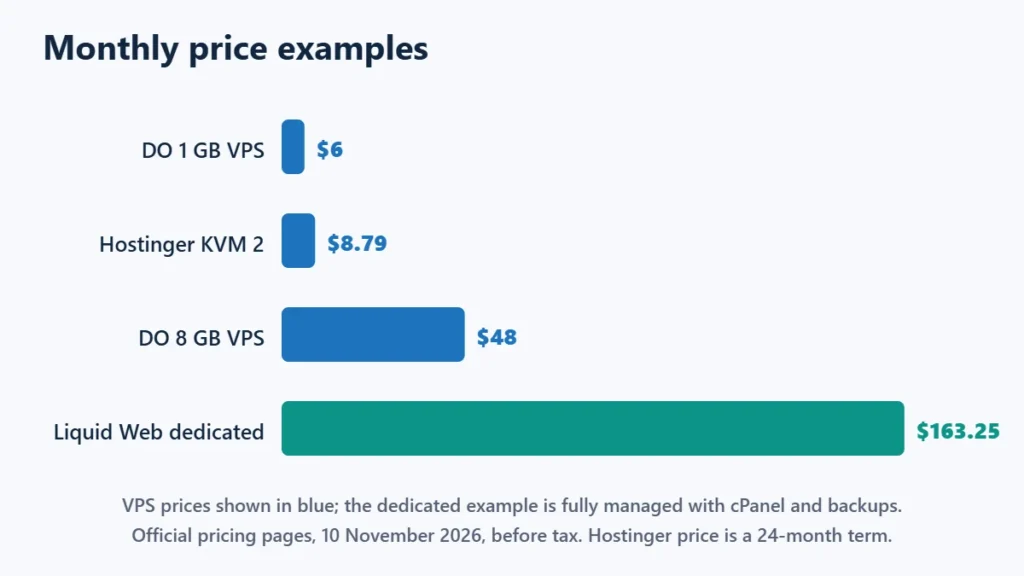
The dedicated example includes full management, cPanel and backup storage, so it is not a like-for-like comparison with an unmanaged VPS. Even so, the gap is wide: a VPS with the same memory can cost a fraction as much. Check renewal prices too, since introductory terms often end with a much higher bill. The best VPS hosting comparison and dedicated server deals roundup list more options.
Managed or Unmanaged Matters as Much
Both VPS and dedicated servers come as unmanaged, where you handle the operating system, security patches and software, or managed, where the provider does much of that for you. A managed VPS can be easier to run than an unmanaged dedicated server, whatever the hardware.
If you do not want to run a server at all, a managed cloud service may suit you better than either. Cloudways vs DigitalOcean shows what that management costs on the same server, and shared vs VPS vs cloud hosting covers the earlier step up from shared hosting.
Signs You Have Outgrown a VPS
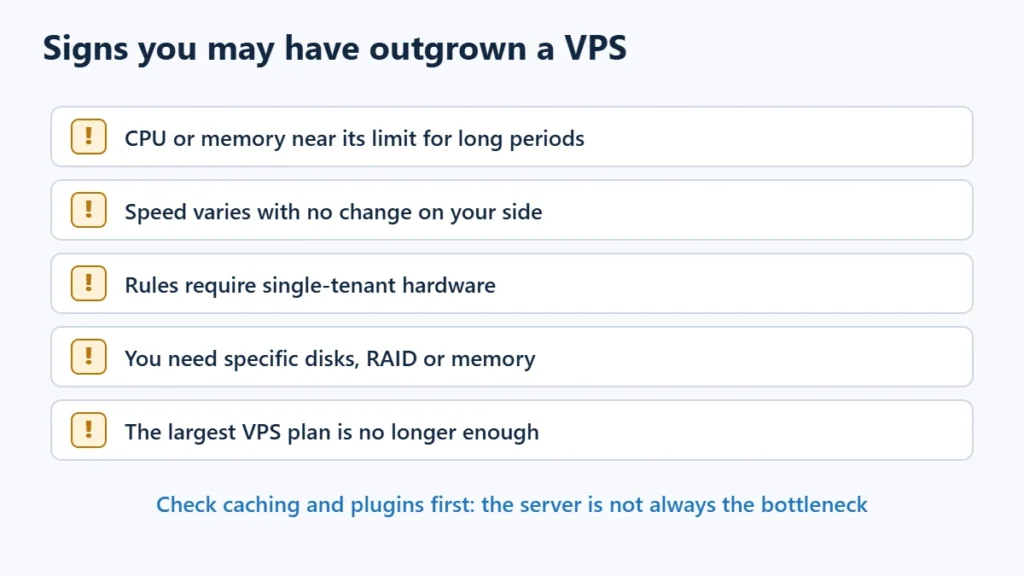
- CPU or memory sits near its limit for long periods, even after caching and optimisation, and the largest VPS plan is not enough.
- Performance varies without changes on your side, which can point to contention on shared hardware.
- Compliance or contract rules require single-tenant hardware.
- You need specific hardware, such as particular disks, RAID layouts or large amounts of memory.
- The workload is heavy and steady, such as large databases or busy applications, so paying for a whole machine is better value than a very large VPS.
Before upgrading, make sure the bottleneck is really the server. A slow site is often fixed by page caching, a lighter theme or fewer plugins. The guide to reducing TTFB in WordPress shows how to find the slow layer first.
Which Should You Choose?
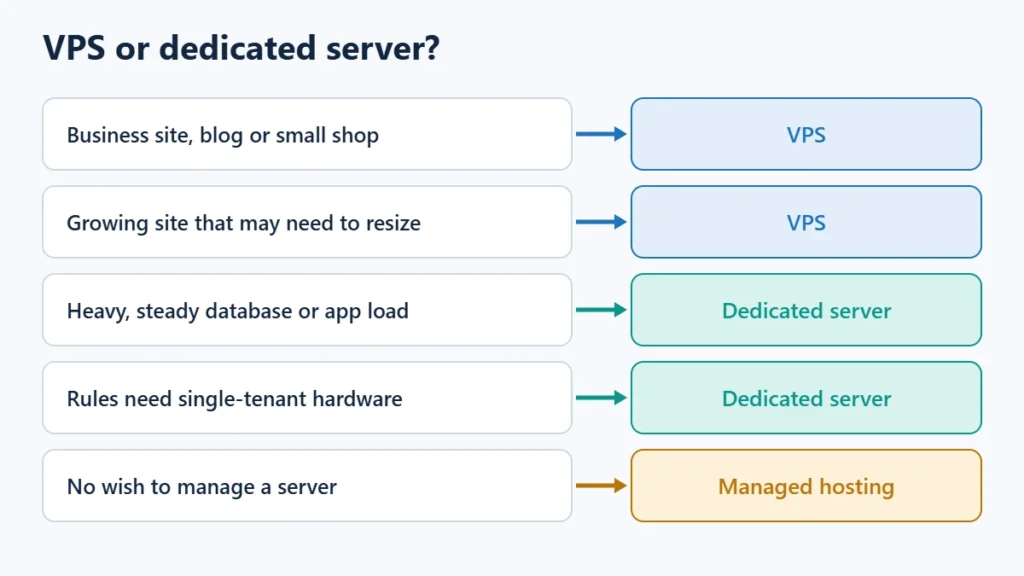
| Your situation | Better fit |
|---|---|
| Business site, blog or small shop | VPS |
| Growing site that may need to resize quickly | VPS |
| Large database or heavy, steady application load | Dedicated server |
| Rules requiring single-tenant hardware | Dedicated server |
| No wish to manage a server | Managed hosting or a managed VPS |
If a VPS fits, you can see Hostinger’s VPS plans. Affiliate link: I may earn a commission at no extra cost to you.
Frequently Asked Questions
Is a dedicated server faster than a VPS?
Not automatically. A dedicated server avoids sharing hardware, which helps with consistency under heavy load, but a well-sized VPS with good caching is fast enough for most websites.
Is a VPS secure enough for a business site?
Yes, for most businesses. Each VPS is isolated by the virtualisation layer. Security depends more on keeping the server and software patched, which is why managed plans appeal to many owners.
How much does a dedicated server cost?
It varies widely by hardware and management. On 10 November 2026, Liquid Web’s fully managed dedicated servers started at $163.25 a month on a two-year term.
Can I move from a VPS to a dedicated server later?
Yes. It is a migration to a new machine, so plan it like any host move: copy, test, then switch DNS.
Do I need a dedicated server for WooCommerce?
Usually not. Most WooCommerce stores run well on a properly sized VPS or managed WordPress hosting. Consider dedicated hardware only when a busy store keeps hitting the largest VPS limits.

Affiliate disclosure: some links on this page are affiliate links, so I may earn a commission if you buy, at no extra cost to you.