A no-logs VPN is one that says it does not record what you do online or details that could tie activity back to you, such as your IP address or connection times. Because you cannot check that yourself, the best evidence is an independent audit of the provider’s servers, published in full. Even then, an audit shows how things stood when it was done, not what happens afterwards.
This guide explains what “no logs” should cover, how audits work, and how to judge a provider’s claim.
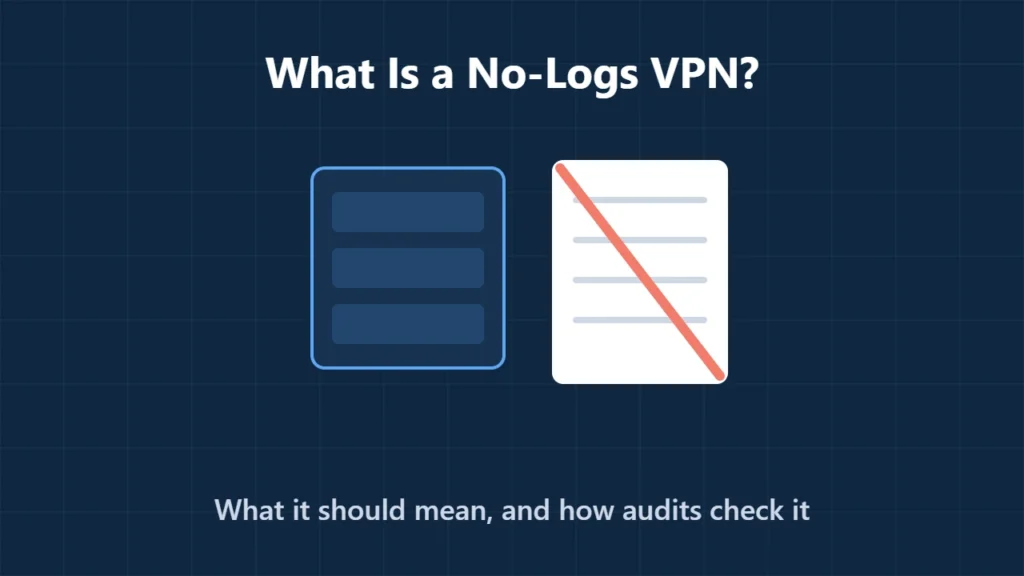
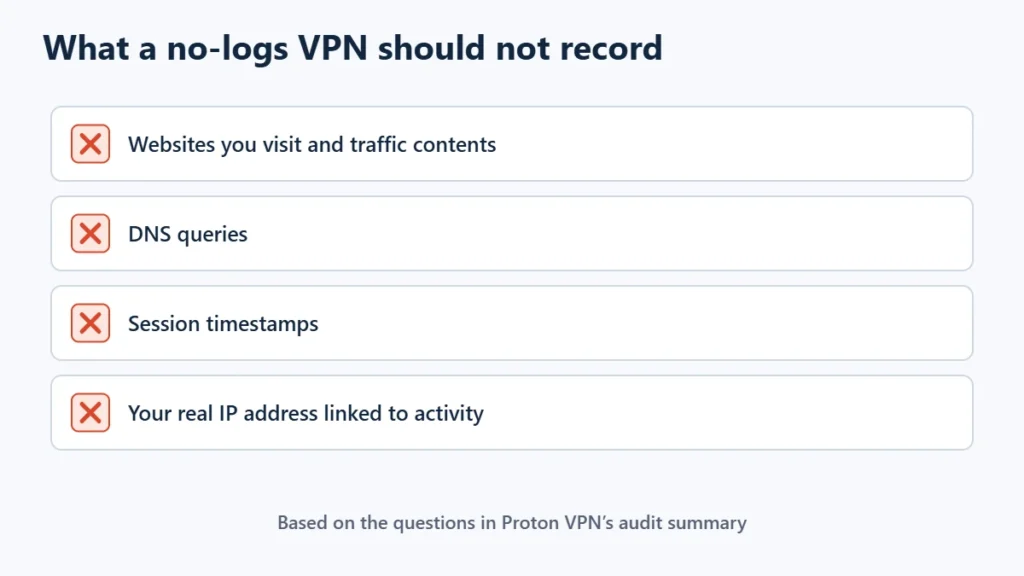
Table of Contents
What “No Logs” Should Mean
A useful no-logs policy covers more than browsing history. Proton VPN says its auditors checked whether its VPN servers:
- Track or log user activity.
- Log connection metadata, such as DNS queries or session timestamps.
- Inspect or log the contents of user traffic.
Read each provider’s privacy policy for exactly what it does keep. Most still hold account details such as your email address and payment information, and the EFF notes that a provider may still collect your IP address when you connect, even if you pay anonymously.
How No-Logs Audits Work
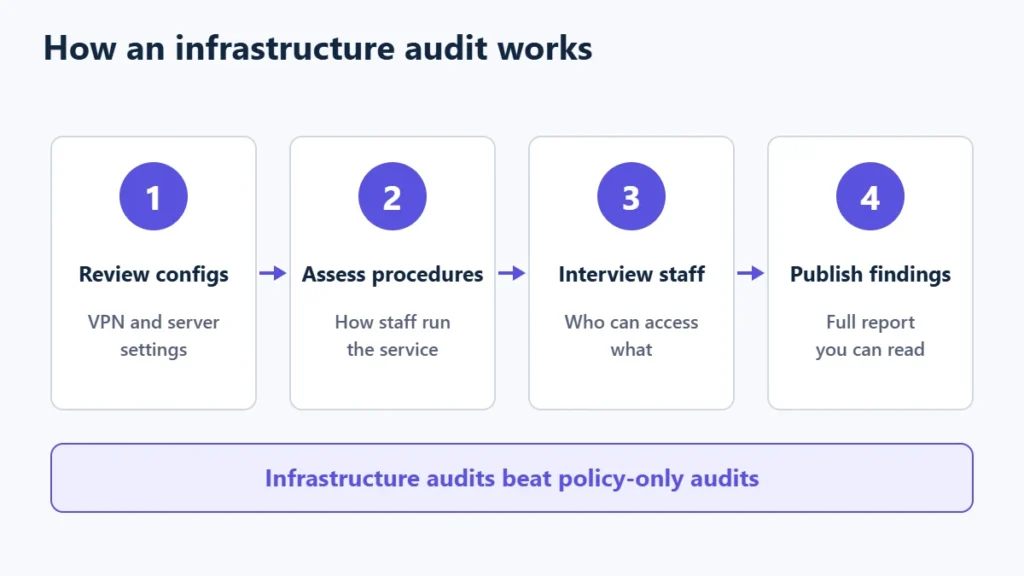
Proton VPN says it has passed five consecutive annual no-logs audits by the security firm Securitum. It describes the auditors spending several days on site each year reviewing VPN and server configurations, assessing operating procedures and interviewing staff, and it publishes the full reports.
Proton also makes a point worth checking with any provider: an audit of the actual infrastructure is stronger than an audit of the privacy policy document. And a report you can read in full is stronger than one kept behind a non-disclosure agreement or a summary.
What Other Providers Say
| VPN | Audit and server claims |
|---|---|
| Proton VPN | Five consecutive annual no-logs audits by Securitum; reports published |
| NordVPN | Independently audited no-logs policy; RAM-only servers |
| Surfshark | Infrastructure and app audits by Cure53 and SecuRing; says all servers are RAM-only |
| CyberGhost | Audited by Deloitte Audit Romania; RAM-only servers |
RAM-only servers keep data in memory rather than on disks, so it is wiped when a server restarts. That reduces what could be stored, but it is still the provider’s description of its setup. See the NordVPN, Surfshark, CyberGhost and Proton VPN reviews for detail.
What an Audit Cannot Prove
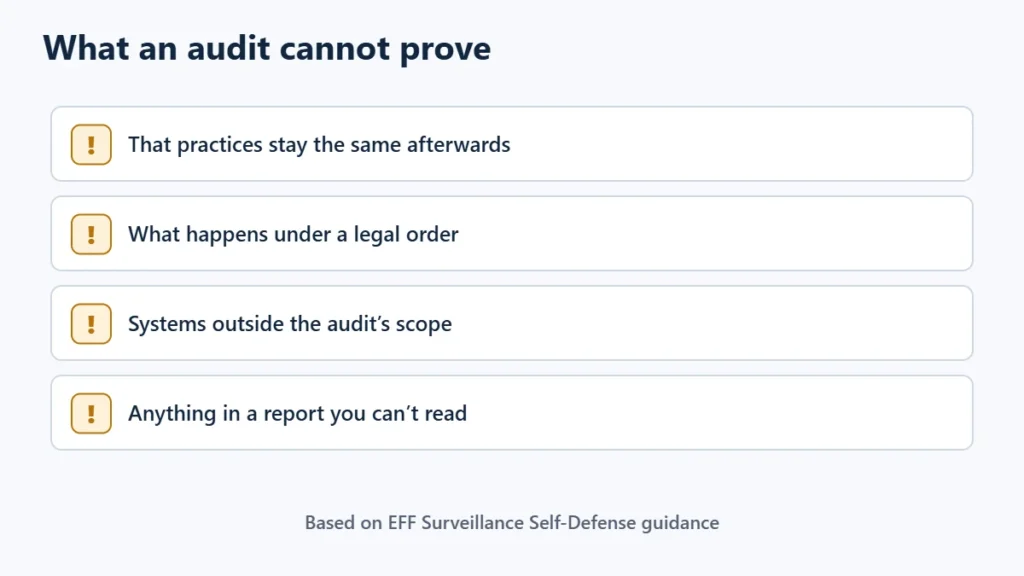
The EFF calls public third-party audits a sign that a provider takes security seriously, but warns there is no certainty practices are not changed after the audit, especially if a government compels it. An audit also only covers its stated scope and date. That is why recurring audits, like Proton’s annual ones, carry more weight than a single report from years ago.
How to Judge a No-Logs Claim
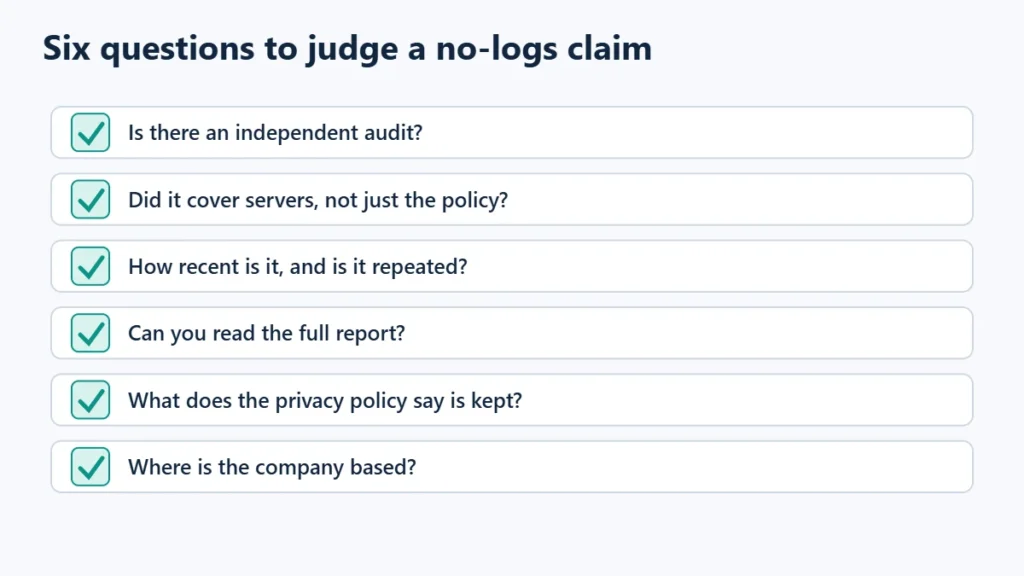
- Is there an independent audit? A marketing claim alone is not evidence.
- What did it cover? Look for server infrastructure, not just the policy text.
- How recent is it, and is it repeated?
- Can you read the full report?
- What does the privacy policy say is kept, such as account and payment data?
- Where is the company based, and what are its legal obligations there?
The EFF also advises being wary of providers that make impossible privacy claims. For an overview of the main options, see the best VPN services comparison, or check current plans at Proton VPN or Surfshark. Affiliate links: I may earn a commission at no extra cost to you.
Frequently Asked Questions
Does any VPN keep truly zero logs?
Every service keeps some account data, such as your email and payment records. A no-logs policy is about not recording your online activity or data that links it to you.
Are VPN audits trustworthy?
They are good evidence for what they cover and when, especially when repeated and published in full. They cannot guarantee future behaviour.
What are RAM-only servers?
Servers that run from memory instead of hard drives, so stored data is wiped on each restart.
Can a no-logs VPN be forced to start logging?
It depends on the law where it operates. The EFF notes an audit cannot rule out changes made after it, including under government pressure.

Affiliate disclosure: some links on this page are affiliate links, so I may earn a commission if you buy, at no extra cost to you.